10 One-Person Business Ideas You Can Actually Run With AI in 2026
By the Stellah Team · Updated July 19, 2026
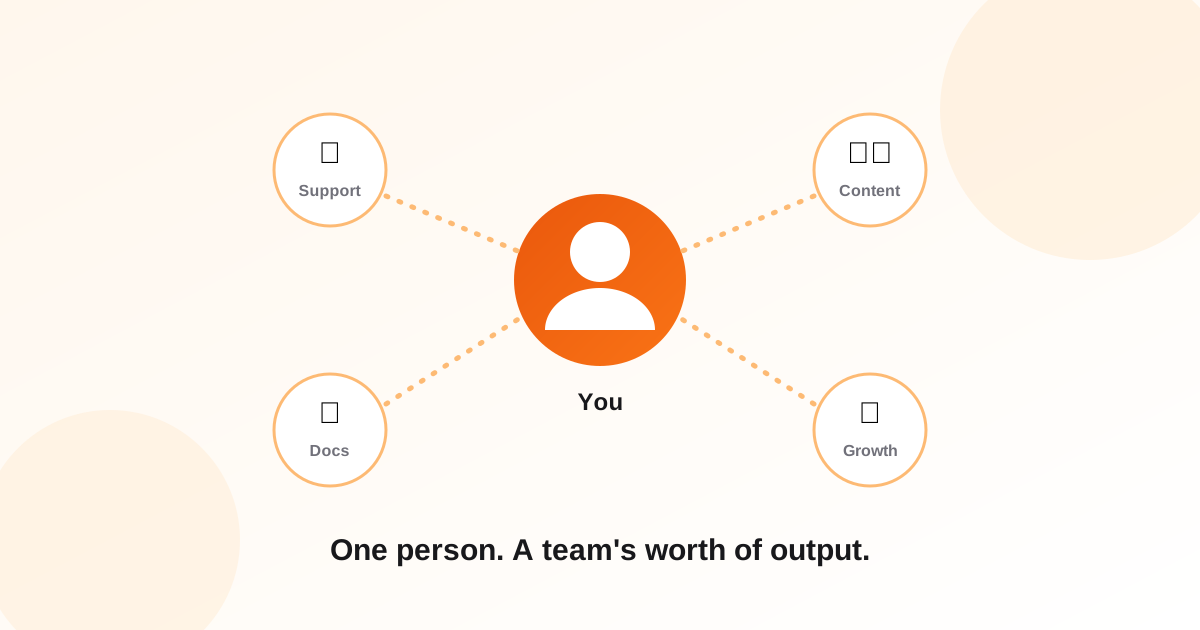
The honest version first: AI doesn't make money for you, and anyone selling you a push-button income is selling you a course. What AI genuinely changed is the head-count math — work that used to force your first three hires (support, content, admin) can now run on tools, which makes businesses viable at one person that weren't before.
These ten ideas are filtered for exactly that: real demand, startable by one person, and a clear place where AI removes the bottleneck. For each: what it is, how the money works, and the honest catch.
1. Productized service
Instead of custom freelancing, sell one deliverable at a fixed price — 'a landing page in 5 days, $900', 'monthly bookkeeping, $250'. Money: predictable per-unit pricing; scale by tightening delivery time. AI leverage: drafting, revisions, and client Q&A eat most hours in service work, and AI compresses all three. The catch: you need one skill you're already good at — the productizing is packaging, not magic.
2. Niche e-commerce with automated support
A focused store — one category you genuinely understand — beats a generic dropshipping catalog in 2026. Money: margin per order; the killer is time-per-order when support questions pile up. AI leverage: a chatbot trained on your shipping, sizing, and returns answers the 60-70% of pre-sale questions that otherwise arrive at midnight. The catch: logistics and product quality are still your problem; AI only removes the inbox.
3. Paid newsletter or niche content site
Money: subscriptions, sponsorships, affiliate revenue — slow to start, compounding after. AI leverage: title testing, outline drafts, repurposing one piece into five formats. The catch: AI-generated filler is exactly what readers unsubscribe from and Google demotes — AI assists the writing, your judgment and experience ARE the product.
4. Micro-SaaS or paid tool
A small piece of software that solves one narrow, boring problem for one identifiable niche. Money: recurring subscriptions from day one, tiny churn if the problem is real. AI leverage: coding assistants collapse build time, and an AI support widget means one founder can support hundreds of customers. The catch: distribution is the hard part, not the build — pick a niche you can actually reach.
5. Local service booking business
Cleaning, tutoring, photography, repairs — boring, local, and permanently in demand. Money: per-job pricing; growth is a referral flywheel. AI leverage: the phone-tag problem. An AI chat on your one-page site answers 'do you cover my area, what does it cost, when are you free' while you're on a job — missed inquiries are the #1 revenue leak in local services.
6. Digital products and templates
Notion templates, spreadsheet models, design assets, courses. Money: near-100% margin, sells while you sleep, but discovery is brutal. AI leverage: production speed and the pre-sale questions ('does this work with X?') that convert browsers into buyers. The catch: marketplaces are flooded with low-effort AI output — differentiation comes from lived expertise.
7. Specialized freelance consulting
The counterintuitive 2026 play: as AI floods the market with mediocre generalist work, verified specialists charge more. Money: day rates or retainers. AI leverage: everything around the expertise — proposals, summaries, follow-ups — so billable hours stay billable. The catch: this is a reputation business; it compounds slowly and can't be faked.
8. Content repurposing service
Businesses have podcasts, videos, and webinars they never turn into posts, clips, and newsletters. You're the factory. Money: monthly retainers per client. AI leverage: transcription and first-draft conversion are 80% of the mechanical work; your editing taste is the paid 20%. The catch: retainer churn — over-deliver for the first three clients and let referrals carry it.
9. Niche job board or directory
A curated list of something scattered — jobs in one industry, suppliers in one region. Money: listing fees and sponsorships once traffic exists. AI leverage: aggregation, enrichment, and the FAQ layer for both sides of the marketplace. The catch: cold-start; expect 6-12 months of curation before charging works.
10. Done-for-you AI setup services
Every small business is being told to 'use AI' and most have no idea where to start. Setting up chatbots, automations, and knowledge bases for local businesses is a real, underserved service. Money: setup fee + optional monthly care plan. AI leverage: you're selling the leverage itself. The catch: you need proof — set up your own stack first and demo it live.
The pattern across all ten
Notice what AI is doing in every idea: it's never the business. It removes the support inbox, the drafting time, the admin drag — the things that historically forced hiring before revenue justified it. Pick the idea where you already have unfair knowledge, and let the tools handle the rest:
Not sure what to call it yet? Start with a name.
Free AI Business Name GeneratorFrequently asked questions
Can you really make money with AI in 2026?
Yes — but indirectly. AI doesn't generate income; it removes costs and time-sinks that made one-person businesses impractical. The money still comes from selling something people want. Anyone promising passive AI income is selling the shovel, not the gold.
Which one-person business is easiest to start?
The one closest to a skill you already have. Productized services and local services monetize fastest (weeks); content, directories, and digital products compound slower (6-12 months). Difficulty is mostly distance from your existing expertise.
How much does the AI tooling cost?
Less than most expect: a capable starting stack is $0-50/month. Free tiers cover writing, documents, and even website chat — including Stellah's free tools and starter plan. Upgrade only when volume forces you to.
Do I need to know how to code?
Only for micro-SaaS, and even there AI assistants have lowered the bar dramatically. The other nine ideas need no code at all — modern tools are point-and-click.
What's the biggest mistake first-time solopreneurs make?
Building for months before talking to a customer. Every idea on this list can be validated in two weeks by offering the service manually before automating anything.