
50 Blog Title Examples That Actually Get Clicks (With the Formulas Behind Them)
By the Stellah Team · Updated July 18, 2026
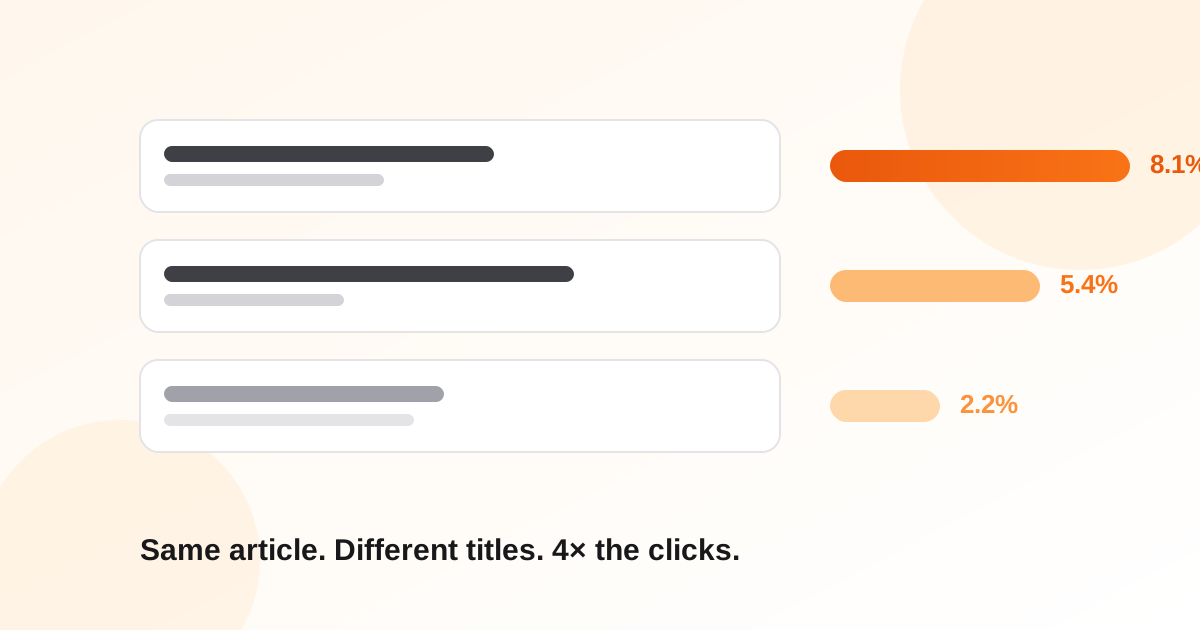
Eight out of ten people read a headline; only two read the rest. That ratio, popularized by Copyblogger, hasn't changed in decades — the title is where your post wins or loses its audience.
This is a working reference, not theory: 50 title patterns organized by the formula that powers them, with a note on why each one earns the click. Swap in your topic and go.
Number titles: specificity signals substance
Numbers promise a scannable, finite read, and odd numbers slightly outperform even ones in most CTR studies. The number should be real — inflating '7 ways' into '31 ways' with filler kills trust by point 12.
- 7 Customer Churn Warning Signs Most SaaS Teams Miss
- 11 Email Subject Lines That Beat 40% Open Rates (With Data)
- 5 Pricing Page Mistakes Quietly Costing You Signups
- 9 Free Tools That Replace a $500/Month Marketing Stack
- 3 Questions That Predict Whether a Customer Will Renew
How-to titles: name the outcome, not the task
The weak version names the activity ('How to Write Emails'). The strong version names the outcome the reader actually wants — and adds a constraint that makes it feel achievable.
- How to Answer Support Tickets in Half the Time (Without Templates That Sound Robotic)
- How to Get Your First 100 Newsletter Subscribers With Zero Audience
- How to Write a Refund Reply That Keeps the Customer
- How to Train an AI Chatbot on Your Website in One Afternoon
- How to Run a One-Person Support Desk Without Burning Out
Question titles: ask what they're already asking
Questions work when they mirror the exact words in the reader's head — which makes them natural fits for search queries. If the question is rhetorical or obvious, it flops.
- Is Live Chat Worth It for a Small Business? The Honest Math
- Why Do Customers Abandon Carts After Asking a Question?
- Should You Answer Support Emails on Weekends?
- What Does 'Good' Customer Response Time Look Like in 2026?
- Can AI Really Handle 75% of Support Tickets?
Negative titles: mistakes outperform best practices
Loss aversion is real: 'mistakes to avoid' consistently out-clicks 'tips to follow' for the same content. Use sparingly — a feed full of negativity fatigues an audience.
- The 6 Support Mistakes That Turn One Bad Review Into Ten
- Stop Writing FAQ Pages Nobody Reads — Do This Instead
- Why Your Chatbot Frustrates Customers (And the 10-Minute Fix)
- 5 'Professional' Email Phrases That Secretly Annoy Your Customers
- The Hidden Cost of Replying to Every Ticket Manually
Data and case-study titles: borrowed proof
Specific numbers from real experience are unfakeable credibility. The more precise the number, the more believable the claim — '32%' beats '30%' beats 'a third'.
- We Analyzed 10,000 Support Chats. Here's What Customers Actually Ask.
- How One Bakery Cut Response Time From 4 Hours to 40 Seconds
- The Exact FAQ Structure That Deflected 61% of Our Tickets
- What Happened When We Let AI Answer Support for 30 Days
- 13 Months of A/B Testing Chat Greetings: What Actually Works
The formula behind all 50
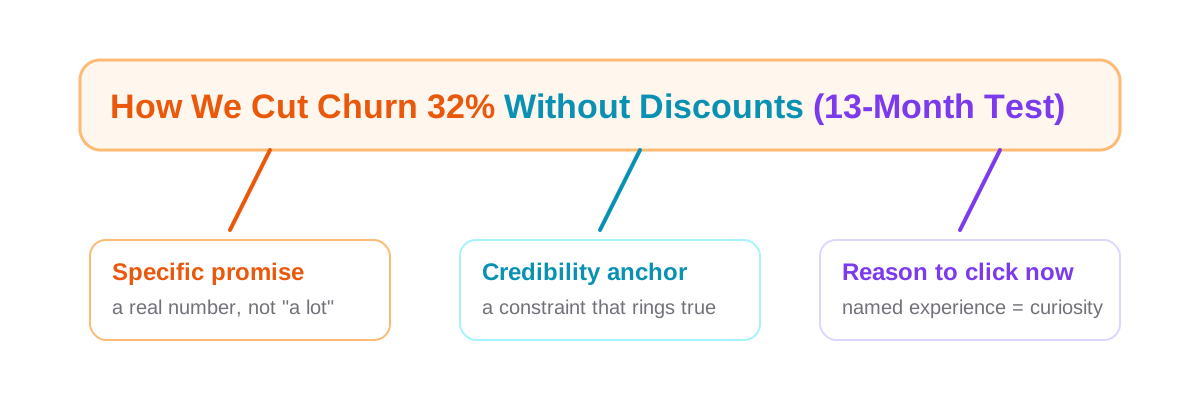
Strip the examples down and the same three ingredients appear every time:
- 1A specific promise — what exactly will I know or be able to do after reading?
- 2A credibility anchor — a number, a constraint, or named experience that makes the promise believable.
- 3A reason to click now — curiosity gap, loss aversion, or timeliness. One is enough; forcing all three reads as clickbait.
Generate your own in seconds
Describe your post once and get twelve title options built on these formulas — free, no sign-up, and you can regenerate until one clicks.
Describe your post, get 12 title ideas instantly.
Try the free AI Blog Title GeneratorFrequently asked questions
How long should a blog title be?
Aim for 50–60 characters so it displays fully in Google results. Front-load the keyword and the promise — anything past ~60 characters risks being cut to an ellipsis.
Should I put my keyword in the blog title?
Yes, as close to the start as reads naturally. It confirms relevance for both searchers and search engines — but never at the cost of a title that sounds robotic.
Do numbers in titles really increase clicks?
Consistently, yes — list-style titles routinely out-click plain statements in CTR studies, and odd numbers edge out even ones. The number must be honest, though: padding a list to hit a bigger number erodes trust.
How many titles should I draft before choosing?
Professional editors typically write 5–15 options per piece. Draft in volume, shortlist three, then pick the one that makes the most specific promise you can actually keep.